
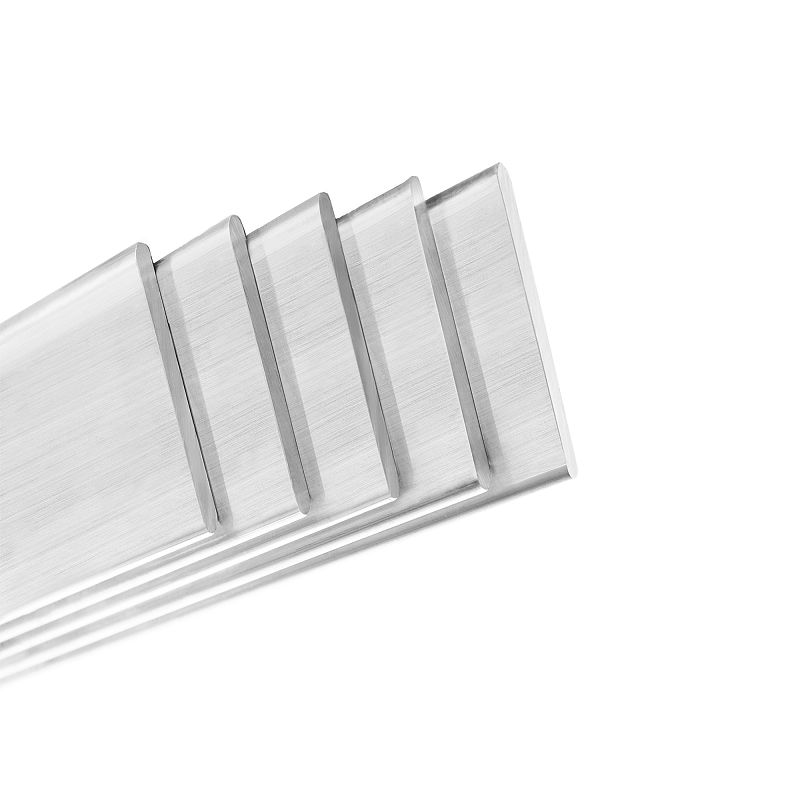
High-Quality Aluminum Busbar from China Manufacturers | Efficient Electrical Distribution Suppliers & Factory
Product Description
Aluminum busbars are conductive materials designed specifically for power distribution and connection, and are usually composed of aluminum alloys. Its unique properties make it ideal for a variety of applications, especially power systems, substations and industrial equipment.
Lightweight Nature
One of the most significant advantages of aluminum busbars is their lightweight nature. This feature facilitates easier handling and installation while reducing the overall structural load on supporting frames, making them ideal for high-rise buildings or mobile equipment.
Cost-Effectiveness
Aluminum offers a more cost-effective alternative to copper. Its lower material cost makes it an attractive option for larger projects on a budget without compromising reliable power transmission.
When comparing aluminum busbars to copper busbars, several factors come into play. While copper busbars are known for their superior electrical conductivity, aluminum busbars offer a more cost-effective alternative. Aluminum’s lower material cost makes it an attractive option for larger projects on a budget. Additionally, aluminum has better corrosion resistance than copper, which is especially beneficial in environments exposed to moisture or corrosive elements. This durability extends the life of the busbars and reduces the need for frequent replacement and maintenance.
The conductivity difference between aluminum and copper must be taken into account when designing electrical systems. Aluminum busbars have lower electrical conductivity and require a larger cross-sectional area to achieve the same load capacity as copper busbars. Engineers must carefully size aluminum busbars to ensure they can handle the required electrical load without overheating or causing inefficiencies. This design consideration is critical to maintaining the safety and reliability of the power distribution system.
In terms of installation and maintenance, the use of aluminum busbars is relatively simple. Their lightweight nature simplifies the installation process, allowing for faster assembly and lower labor costs. Additionally, aluminum busbars have lower maintenance requirements compared to other materials because they are less susceptible to corrosion and degradation. This ease of maintenance is particularly beneficial in industrial environments, where downtime can result in significant financial losses.
Overall, aluminum busbars represent a practical and efficient solution for large-scale power transmission and distribution, combining cost-effectiveness with reliable performance. Aluminum busbars play a vital role in modern electrical systems and offer a range of advantages that make them suitable for a variety of applications. Its lightweight design, cost advantages and corrosion resistance make it the first choice for power distribution in substations and industrial equipment.
Frequently Asked Questions
What are the primary advantages of aluminum busbars?
The main advantages include their lightweight nature, which simplifies installation, significant cost-effectiveness compared to copper, and excellent corrosion resistance.
How does the conductivity of aluminum compare to copper?
Aluminum has lower electrical conductivity than copper. Therefore, to achieve the same load capacity, aluminum busbars require a larger cross-sectional area.
Are aluminum busbars resistant to corrosion?
Yes, aluminum has better natural corrosion resistance than copper, making it highly suitable for environments exposed to moisture or corrosive elements.
Why is the lightweight feature of aluminum busbars important?
Being lightweight reduces the structural load on supporting frames and makes handling and installation much easier, especially in high-rise buildings or industrial settings.
Where are aluminum busbars commonly used?
They are widely used in power systems, electrical substations, industrial equipment, and large-scale power distribution networks.
Do aluminum busbars require high maintenance?
No, they have lower maintenance requirements because they are less susceptible to degradation and corrosion compared to many other conductive materials.